The Definitive Photobiomodulation Wavelength Guide: 630nm to 1060nm
The biological efficacy of photobiomodulation (PBM) is not arbitrary. It is strictly dictated by the optical absorption spectra of specific cellular chromophores—predominantly Cytochrome c Oxidase (Complex IV) in the mitochondrial respiratory chain and nanoscale interfacial water layers inside eukaryotic cells. Here is the rigorous scientific breakdown of every therapeutic wavelength.
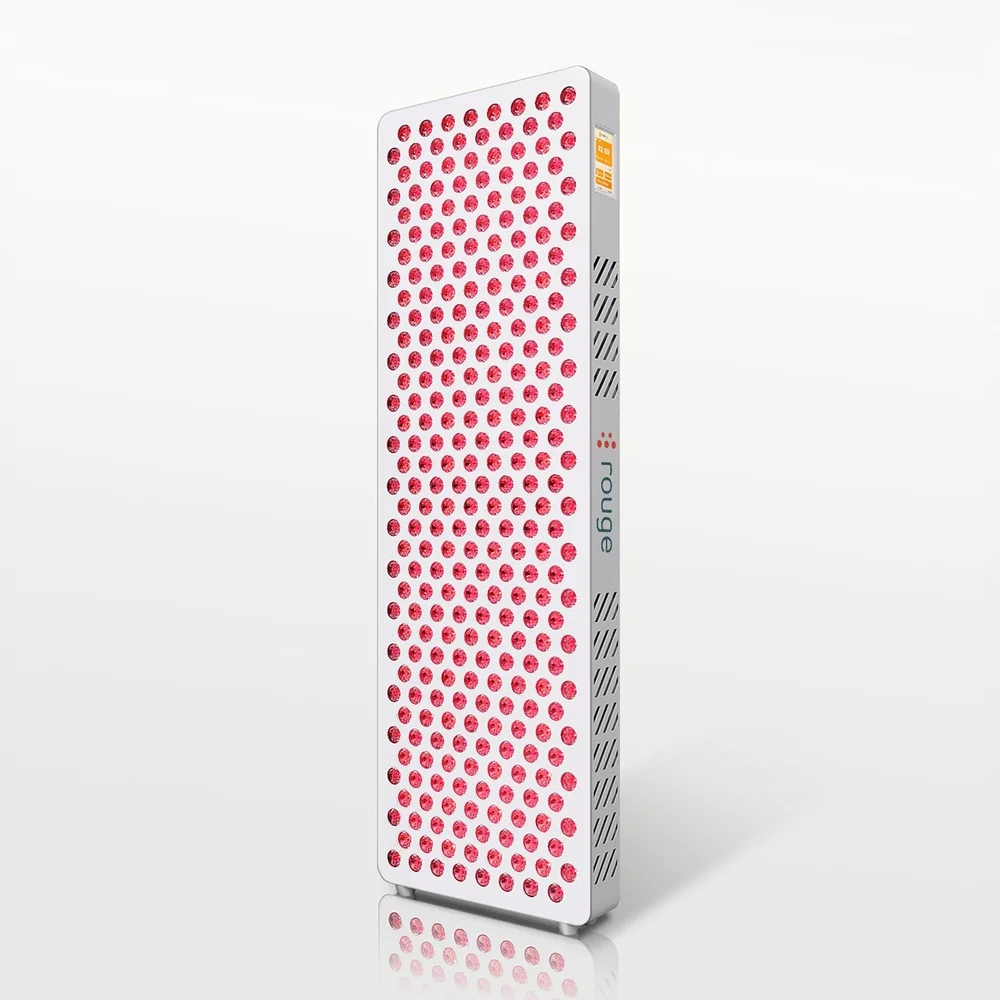
📊 Optical Window Spectrum: Penetration Depths & Biological Targets
| Wavelength | Spectral Band | Penetration Depth | Primary Chromophore | Key Clinical Applications |
|---|---|---|---|---|
| 630nm | Visible Red | 1.0 – 1.5 mm | Epidermal CCO | Fine lines, acne redness, eczema, superficial wounds |
| 650nm | Visible Red | 1.5 – 2.0 mm | Follicular CCO | Scalp microcirculation, hair follicle anagen stimulation |
| 660nm | Visible Red | 2.0 – 3.0 mm | Dermal CCO (Heme a3) | Type I/III pro-collagen mRNA, elastin synthesis, scar tissue |
| 670nm | Deep Visible Red | 2.5 – 3.5 mm | Retinal & Dermal CCO | Photoreceptor mitochondrial rescue, macular vitality, inflammation |
| 810nm | Near-Infrared (NIR) | 25 – 40 mm | Oxidized CCO (CuA/CuB) | Transcranial neurogenesis, TBI recovery, deep brain stimulation |
| 830nm | Near-Infrared (NIR) | 30 – 45 mm | Reticular CCO & Mast Cells | Post-surgical edema, deep hematoma resorption, angiogenesis |
| 850nm | Near-Infrared (NIR) | 35 – 50 mm | Deep Tissue CCO | Spinal disc pain, knee osteoarthritis, DOMS athletic recovery |
| 1060nm | Extended NIR | 40 – 60 mm | Interfacial Water (EZ) | ATP synthase rotor viscosity reduction, cerebral blood flow |
1. The Primary Molecular Mechanism: Cytochrome c Oxidase & Nitric Oxide Displacement
At the core of red and near-infrared light therapy is Cytochrome c Oxidase (CCO), also designated as Complex IV of the mitochondrial electron transport chain. CCO is a transmembrane protein containing four redox active metal centers: two copper sites (CuA and CuB) and two heme iron sites (heme a and heme a3).
In stressed, fatigued, or aging cells, nitric oxide (NO) competitively binds to the heme a3 / CuB binuclear catalytic center of CCO, displacing molecular oxygen. This NO blockade acts as a cellular brake, halting the reduction of oxygen to water, collapsing the mitochondrial membrane potential (Delta-Psi-m), and drastically reducing Adenosine Triphosphate (ATP) cellular energy synthesis.
⚡ The 4-Step Photobiomodulation Cascade (Karu & Hamblin Model):
- Photon Absorption: Photons between 630–670nm and 810–850nm match the electronic transition states of CCO metal centers.
- NO Photodissociation: The absorbed photonic energy cleaves the coordinate covalent bond between nitric oxide and CCO, freeing the enzyme's catalytic site.
- Oxygen Re-binding & Proton Gradient: Oxygen instantly re-binds to CCO, allowing unobstructed electron flow from Cytochrome c, pumping protons into the intermembrane space and elevating Delta-Psi-m.
- ATP Surge & Retrograde Signaling: ATP synthase rotates at maximum velocity, generating excess cellular energy, while transient micro-bursts of reactive oxygen species (ROS) trigger downstream transcription factors (NF-κB, AP-1) for tissue repair, fibroblast activation, and dermal collagen & skin anti-aging synthesis.
2. The 1060nm Research Hypothesis: Interfacial Water Dynamics & ATP Synthase Kinetics
While 630nm to 850nm light primarily targets CCO chromophores, the 1060nm near-infrared band (featured in advanced Canadian panels examined in our Rouge Pro G4 review) is studied under a distinct biophysical model: interfacial water layer modulation.
In seminal photobiology models proposed by researchers such as Professor Andrei Sommer, the mitochondrial ATP synthase motor rotates within a nanoscopic layer of interfacial boundary water. In stressed or aged cellular environments, increased hydrodynamic drag within this boundary layer has been hypothesized to impede rotational kinetics.
Photons in the 1060nm spectrum align with vibrational overtone absorption bands of water molecules. Laboratory research hypothesizes that this optical absorption temporarily modulates interfacial water viscosity, reducing hydrodynamic resistance around rotary ATP synthase complexes and supporting cellular energetics without thermal tissue damage.
3. The Arndt-Schulz Biphasic Dose-Response Law & Dosing Formula
Photobiomodulation does not follow a linear "more is always better" curve. Instead, it follows the Arndt-Schulz Biphasic Dose-Response Curve (Hamblin, 2016):
- Sub-Therapeutic Underdose (<3 J/cm²): Insufficient photon density to trigger significant NO photodissociation.
- Optimal Therapeutic Window (5 – 50 J/cm²): Maximum ATP generation, fibroblast proliferation, and anti-inflammatory signaling.
- Overdose & Photobleaching (>80 – 100 J/cm²): Excessive photon flux causes mitochondrial saturation, oxidative exhaustion, and cellular inhibition.
📐 The Fundamental Dosing Equation
To calculate your exact treatment dose in Joules per square centimeter (J/cm²):
Example 1 (Facial Mask): At 30 mW/cm² for 10 minutes (600s) = (30 × 600) ÷ 1,000 = 18 J/cm² (Ideal for collagen in flexible medical liquid silicone LED masks).
Example 2 (High-Output Panel): At 80 mW/cm² at 6" for 8 minutes (480s) = (80 × 480) ÷ 1,000 = 38.4 J/cm² (Ideal for deep joint repair using high-output red light therapy panels).
4. Optical Window Physics: Melanin, Hemoglobin & Water Absorption
Why do therapeutic devices use 600nm to 1100nm rather than ultraviolet or blue light? The answer lies in the "Near-Infrared Diagnostic and Therapeutic Optical Window":
- Short Wavelengths (<600nm): Blue (415nm) and green (520nm) light are heavily absorbed by epidermal melanin and blood hemoglobin within the top 0.5 mm of skin. They cannot penetrate to muscles or joints (though blue is effective for surface P. acnes bacteria in facial masks).
- The Optical Window (600nm – 1100nm): Here, melanin and hemoglobin absorption drop dramatically, allowing photons to travel deep through tissue. 810nm–850nm photons travel up to 50 mm, traversing the skull for transcranial photomodulation and penetrating articular cartilage in knees and hips.
- Long Wavelengths (>1200nm): Strong bulk water absorption converts light directly into thermal heat (as in far-infrared saunas), rather than photochemical energy.
📚 Key Scientific Citations & Published Clinical Trials
- Hamblin, M. R. (2016). "Mechanisms and applications of the anti-inflammatory effects of photobiomodulation." AIMS Biophysics, 4(3), 337–361. (Demonstrated CCO NO displacement and downstream NF-κB suppression).
- Karu, T. I. (2010). "Mitochondrial mechanisms of photobiomodulation in context of new data about multiple roles of ATP." Photomedicine and Laser Surgery, 28(2), 159–160.
- Sommer, A. P. (2019). "Mitochondrial Cytochrome c Oxidase Is Not the Primary Target for Near-Infrared Light—It Is Mitochondrial Water." Annals of Translational Medicine, 7(Suppl 1), S13. (Foundational paper on 1060nm interfacial water viscosity).
- Wunsch, A., & Matuschka, K. (2014). "A controlled trial to determine the efficacy of red and near-infrared light treatment in patient satisfaction, reduction of fine lines, wrinkles, skin roughness, and intradermal collagen density increase." Photomedicine and Laser Surgery, 32(2), 93–100.
- Barolet, D., et al. (2008). "Regulation of skin collagen metabolism in vitro using a pulsed 660 nm LED light source: Clinical correlation with a single-blinded study." Journal of Investigative Dermatology, 128(12), 2791–2796. (Confirmed downregulation of MMP-1 collagenase).
- Chung, H., et al. (2012). "The nuts and bolts of low-level laser (light) therapy." Annals of Biomedical Engineering, 40(2), 516–533. (Detailed mathematical modeling of Arndt-Schulz biphasic responses).